Welcome readers,
My name is Josh Young and I am a grade 10 student at St Virgil’s College of Hobart, Tasmania, Australia. As part of the year 10 health curriculum I have been called upon to draw attention to mental health and mental illness. I intend to help develop greater understanding around mental health and its importance, in addition to raising awareness for mental illness.
What is Mental Health?
Mental health pertains to the cognitive aspect of health. Mental health is a person’s condition with regard to their overall psychological well-being. Our mental health affects how we process information and behave. It also determines how we handle stress, relate to others, and make choices. Mental health is critically important at every stage of life, from childhood and adolescence through to adulthood. When mental health is treated and cared for, “individuals are able to realise their own potential, can cope with the normal stresses of life, can work productively and fruitfully, and are able to make a contribution to their community” [1] (World Health Organization, 2019). Conversely, people who neglect and fail to care for their mental health are susceptible to mental illnesses.
What is Mental Illness?
Mental illness is a general term for a group of illnesses of the mind which affect a person’s cognitive function and mental health. Mental illness symptoms typically affect a person’s thinking, perceptions, mood and behaviour. Mental illness can make it difficult for someone to cope with school, work, relationships and other demands. The relationship between stress and mental illness is complex, but it is known that stress can worsen an episode of mental illness. Mental illnesses are considerably harder to notice, diagnose and treat than physical illness and injury. Most people attempt to manage their mental illnesses with medication, counselling or both.
Within Australia, approximately one in five people aged 16 to 85 years experience a mental illness in any one year [2]. According to research conducted by Beyond Blue, anxiety is Australia’s most prevalent mental illness. “In any given year, more than two million Australians will experience anxiety and one in four Australians will experience an anxiety condition at some stage in their life,” said Beyond Blue CEO Georgie Harman [3]. Anxiety is intensive, excessive and persistent worry and fear about ordinary situations. Anxiety is different to the everyday emotions of worry and stress. Anxiety is when ones feelings do not subside and are ongoing without any particular reason or cause. Due to people’s lives becoming constantly busier and more stressful, in addition to the presence of social media, anxiety is Australia’s most prominent mental illness.
Depression is Australia’s second most common mental illness. In any one year, around 1 million Australian’s will experience depression [4]. Depression is characterised by a persistent sadness or loss of interest in activities. Depression is deeper than just being upset, but experiencing these emotions intensely, for a prolonged period of time, often without any apparent reason. Depression can have significant impacts on a person’s behaviour, causing considerable impairment to daily life. Some individuals with depression have a full remission of the disorder with effective treatment. However, only around a third (35.3%) of those suffering from severe depression seek treatment from a mental health professional [5]. People often resist treatment due to the stigma around mental illness and/or because they believe depression is not serious. People often believe that they can treat depression themselves because they see it as a personal weakness rather than a serious medical illness. This mentality often results in worsened episodes of depression, which can lead to suicide. People feeling suicidal are overwhelmed by painful emotions and see death as the only way out, losing sight of the fact that suicide is a permanent “solution” to a temporary state. Essentially, depression is an extremely serious, devastating and prominent mental illness within Australia.
Ultimately, mental health is a crucial component of an individuals overall wellbeing. Mental health dictates how we think, behave and our psychological and emotional well-being. Caring for our mental health is vital at all ages. Those who fail to care for their mental health are susceptible to mental illness, which affect a person’s thinking, perceptions, mood and behaviour. Within Australia, the most prominent mental illnesses are anxiety and depression. Essentially, mental health is crucial to our overall wellbeing.
What Affects Can Mental Health Have on Other Aspects of Health?
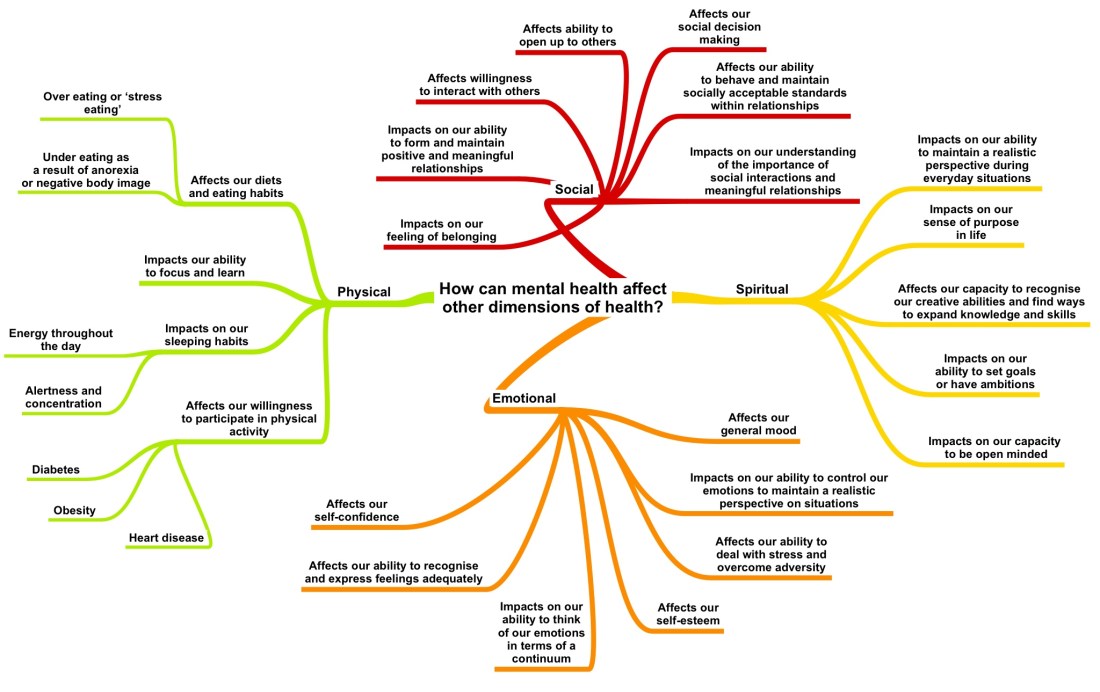
All aspects of health are strongly entwined. When one aspects of health is neglected it can have detrimental impacts on other dimensions of health. Conversely, when a particular aspect of health is properly catered for, it can be beneficial to other dimensions. Therefore, mental health can have drastic impacts and affects on the other four components of our health – physical, social, emotional and spiritual;
R U OK Day and Stigma
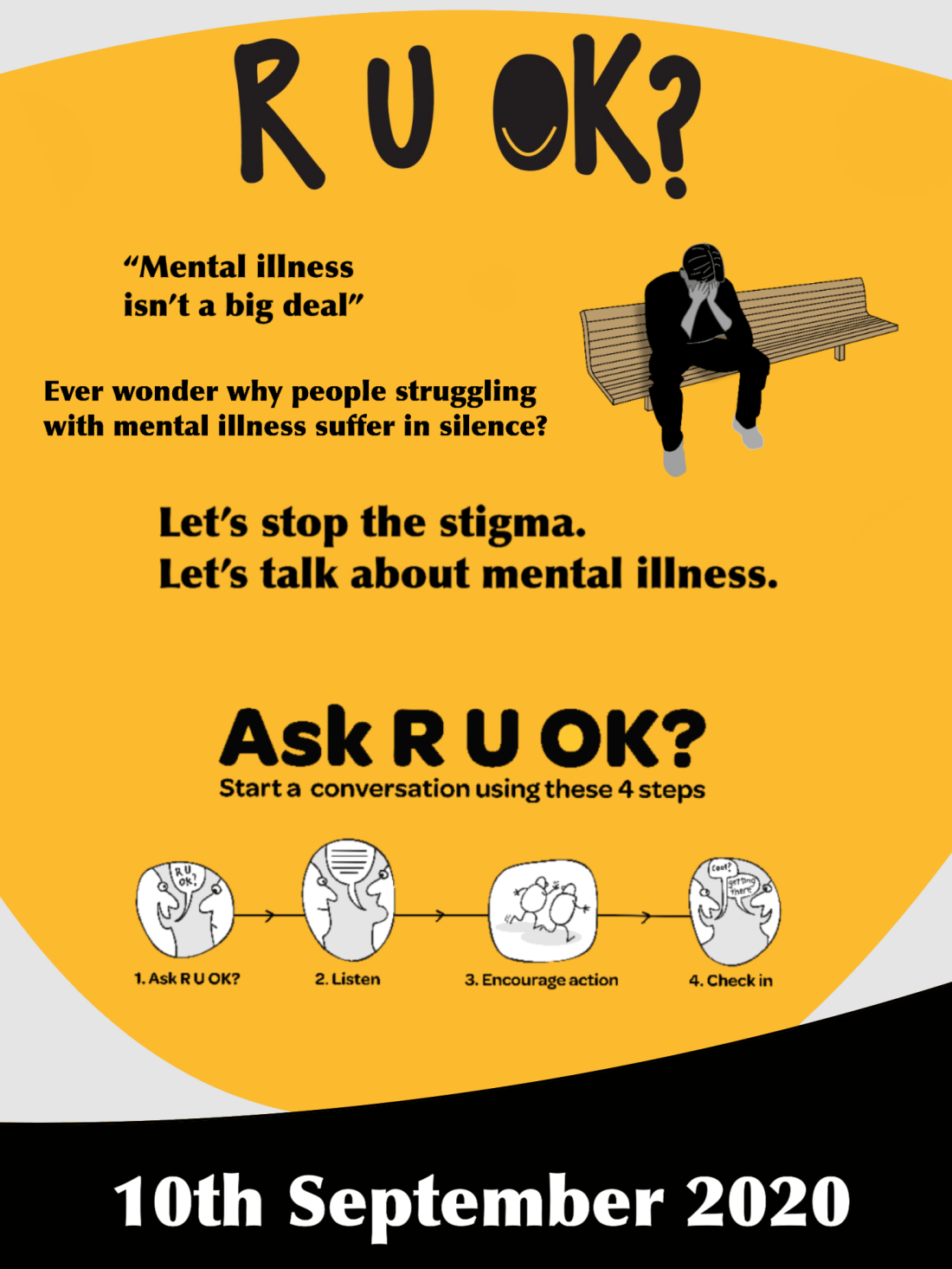
R U OK is a non-profit mental health organisation founded by Gavin Larkin in 2009. The organisation revolves around the slogan “R U OK?” (are you okay), and advocates people to have conversations with others about mental health. The organisation has a nationally dedicated R U OK Day, held annually on the second Thursday of September. The day encourages Australians to connect with people who seem emotionally insecure, are struggling with their mental health or just seem off. By having a conversation with someone experiencing mental illness, you are demonstrating willingness to care and support. Additionally, you are giving them an opportunity to share what they are going through. This can prevent the person from feeling isolated and allows them to feel wanted and cared for, which can make all the difference. The day also aims to promote community cohesiveness in reducing stigma around mental illness. Stigma is defined as “a mark of disgrace that sets a person apart from another” [7]. Once a person is labelled by their mental illness, they are no longer seen as individuals but as part of a stereotyped group. Negative attitudes towards these stereotyped groups creates prejudice leading to discrimination. Within Australian culture, social stigma around mental illness is prominent. This stigma can prevent people getting the help they require as they are ashamed of their illness. Essentially, the purpose of R U OK day is to prevent people suffering from mental illness in silence and reduce the stigma associated with mental illness. Nexts years R U OK Day falls on the 10th September 2020;
Finding Help
Scenario
Leading up to the end of year exams, a friend of yours was really worried and stressed about doing them – to the extent that he was making himself sick and really felt like not coming to school to sit the exams.
Within this scenario the friend appears to be suffering from anxiety or just generally struggling with his mental health due to stress overload. There are countless support options which the friend could explore to help him get through the stressful exam period and deal with his mental health.
Within his school there are numerous support options. The majority of schools have a psychiatrist employed, which could be an extremely effective and free support option. A psychiatrist would be extremely beneficial as they are experts in mental health. They specialise in diagnosing and treating people with mental illness. As a school psychiatrist, they would be particularly familiar in dealing with work load related anxiety and stress. Additionally, out of professionalism, a psychiatrist should be trusted to keep everything said completely confidential. Essentially, talking to a school psychiatrist would be extremely beneficial to the friend because they specialise in treating people with mental illness.
The friend could also talk to a trusted teacher. A teacher would be a useful support option as they understand the work load and stress the friend is experiencing. The teacher may be able to arrange alternate exam conditions to help make the process less stressful, or even offer external support to make the exams less intimidating. Ultimately, a trusted teacher would be an effective support option as they may be able to reduce the stress and intimidation associated with the situation.
Within the wider community, there are also numerous support options. The friend joining a support group would be an effective option. A support group would offer a safe environment to share their situation with others and receive advice. Support groups also allow people to grasp a realistic perspective on their situation. Additionally, they provide the feeling of inclusiveness and belonging. Essentially, a support group could be an effective support outlet for the friends mental health.
Speaking to a priest may also be helpful, even if the friend is not religious. A priest will generally find time to listen to a person’s issues and troubles. They are also often able to lend support and advice to assist the person. Essentially, speaking to a priest is a viable support outlet for the friend.
Joining a sports team could also be beneficial to the friend, leading up to exams. Sport teams provide a sense of belonging and are overall beneficial to ones mental health. Sports help reduce stress as they forces individuals to apply themselves fully to the task at hand, leaving behind previous thoughts and worries. Sport also stimulates the release of endorphins, which naturally relieves stress, and boosts happiness. Additionally, the social aspect of the team would allow the friend to connect and open up to others about his situation. Ultimately, joining a sports team could be a successful support option for the friend in the scenario.
The friend could seek help online from large scale mental health organisations. These organisations include the likes of: Black Dog Institute, Reach Out, Sane Australia, Headspace and Beyond Blue;
Beyond Blue
Beyond Blue is a non-profit organisation which provides information and support for mental illness. Beyond Blue began in October 2000 as a five-year initiative of the Australian federal and state governments. Beyond Blue is one of the most trusted and prominent metal health support organisations in Australia. The current Chair of Beyond Blue is former Prime Minister, Julia Gillard, demonstrating the seriousness and accreditation of the organisation. Their goal is “to help everyone in Australia achieve their best possible mental health” [6]. Beyond Blue works to offer those experiencing mental illness support, in addition to raising community awareness of mental illness to reduce associated stigma. Beyond Blue works in partnership with health services, schools, workplaces, universities, media and community organisations.
Within this scenario, Beyond Blue could be utilised by the friend. Beyond Blue is very experienced in the field of the friends symptoms, stress and anxiety; the most common mental illness Beyond Blue combats is stress related anxiety. Beyond Blue is highly trusted, all the information they receive during support sessions is kept in absolute confidentiality. Beyond Blue also offers a wide variety of support methods to suit the friends needs. They offer 24/7 call services, online chat sessions from 3pm-12am everyday, 24/7 email service, 24/7 online forums and counselling sessions with psychiatrists. Essentially, Beyond Blue could be an easily accessible and effective support option for the friend in this scenario.
Beyond Blue can be reached at:
• https://www.beyondblue.org.au
• 1300 22 4636 (24/7)
Headspace
Headspace is a non-profit organisation for youth mental health. Headspace was founded by the Australian Government in 2006. Headspace delivers support to young people aged from 12 to 25 years to reduce the impact of depression, anxiety, stress- particularly school and work related – and drug/alcohol addiction. Headspace has more than 100 centres across Australia which can be accessed for free or at low cost. Staff include doctors, psychiatrists, social workers, occupational therapists, nurses, youth workers, counsellors and alcohol/drug workers.
Within this scenario, Headspace could be an effective support option for the friend undergoing school related pressure. Headspace is a well trusted and accredited organisation, which keeps all personal information in confidentiality. This service would be particularly beneficial to the friend, because at every Headspace centre, there is a specific program established to help students deal with stress and learn basic organisation skills to cope with work loads. Headspace are also able to organise tutoring if required. Additionally, there are counsellors, psychologists and doctors to talk about any issues with anxiety and stress. Headspace offers a 24/7 call service in addition to a 24/7 online chat service. Essentially, Headspace would provide numerous support options, both online and in person, to help relieve the friend of the school related stress/anxiety he is experiencing.
Headspace can be reached at:
• 1800 650 890 (24/7)
Take Home Message
Ultimately, mental health is a serious component of our wellbeing. Mental health dictates our behaviour, thought process, decision making and how we relate to others. Failure to care for mental health can result in detrimental impacts to other aspects of health, in addition to being susceptible to mental illness. Mental illnesses are serious conditions. They affect a person’s overall cognitive function, specifically a person’s thinking, perceptions, mood and behaviour.
If you are experiencing a mental illness or struggling with your mental health please seek help. There are countless support options; there are numerous large scale organisations: Reach Out, Beyond Blue, Black Dog Institute, Headspace, etc. There are support options within your school/workplace: teachers, boss, psychiatrist and even a trusted friend/colleague. Finally, there are countless support options within your community: support groups, church, sport, etc. If ashamed due to the stigma associated with mental illness, there are options within online organisations, to keep your identity completely anonymous. If you are suffering from a mental illness, do not think it is a phase or something you can deal with alone, please seek help.
References
1. World Health Organisation. (2019). Suicide: one person dies every 40 seconds. Viewed: 13 September 2019. <https://www.who.int/mental_health/en/>.
2. Australian Government Department of Health. (2009). The magnitude of the problem. Viewed: 14 September 2019. <https://www1.health.gov.au/internet/publications/publishing.nsf/Content/mental-pubs-f-plan09-toc~mental-pubs-f-plan09-con~mental-pubs-f-plan09-con-mag>.
3. Beyond Blue. (2017). Can you name the most common mental health issue in Australia?. Viewed: 14 September 2019. <https://www.beyondblue.org.au/media/news/news/2017/10/07/can-you-name-the-most-common-mental-health-issue-in-australia>.
4. Beyond Blue. (2019). The Facts. Viewed: 19 September 2019. <https://www.beyondblue.org.au/the-facts>.
5. Mental Health America: MHA (2019). Basic Facts About Depression. Viewed: 19 September 2019 <https://www.mhanational.org/conditions/depression>.
6. Beyond Blue. (n.d.). 3 million Australians are living with anxiety or depression. Viewed: 19 September 2019 <https://www.beyondblue.org.au>.
7. Government of Western Australia: Department of Health. (2009). STIGMA, DISCRIMINATION AND MENTAL ILLNESS. Viewed: 19 September 2019 <http://www.health.wa.gov.au/docreg/Education/Population/Health_Problems/Mental_Illness/Mentalhealth_stigma_fact.pdf>.
Figure 1. Healthy Place. (2019). What Is a Mental Illness? [image]. Retrieved: 18 September 2019 <https://www.healthyplace.com/other-info/mental-illness-overview/what-is-a-mental-illness>.
Australian Government: Department of Health. (n.d.). Mental Health. Viewed: 16 September 2019 <https://www.health.gov.au/health-topics/mental-health>.
Australian Government: Department of Health. (n.d.). What is Mental Illness?. Viewed: 18 September 2019. <https://www1.health.gov.au/internet/main/publishing.nsf/content/F602B63256E116BBCA257BF00020AACF/$File/whatmen2.pdf>.
Beyond Blue. (n.d.). Beyond Blue Support Service. Viewed: 17 September 2019 <https://www.beyondblue.org.au>.
Headspace. (n.d.). Headspace: Get Support. Viewed: 16 September 2019 <https://headspace.org.au>.

 Mental Health